The Value of Expert Care for Dental Implants in Calabasas CA
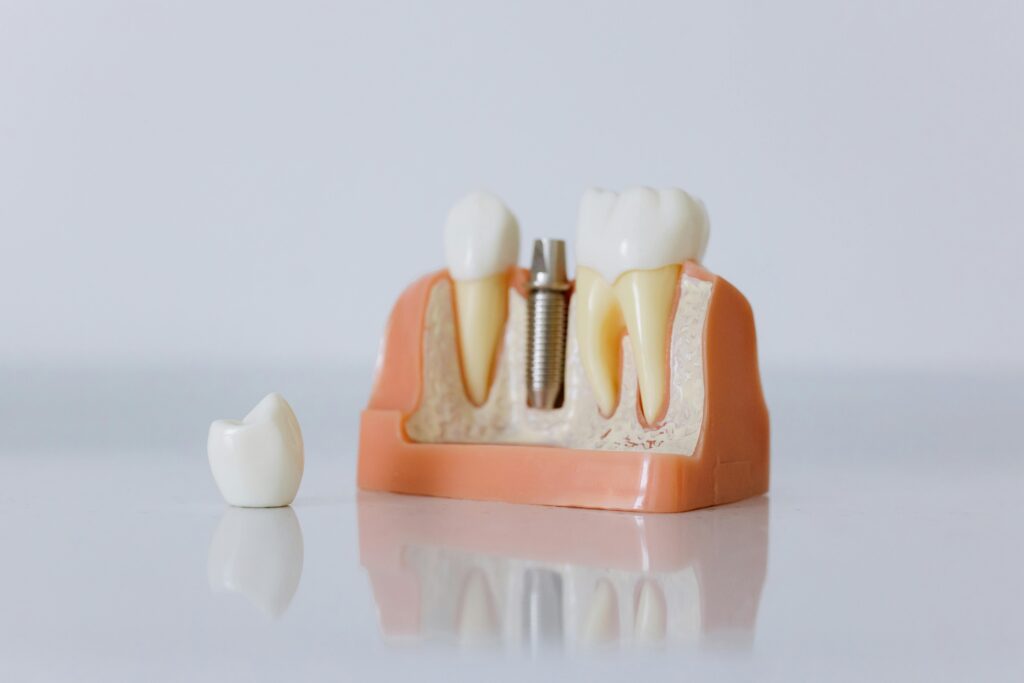
Choosing dental implants is rarely a casual decision. For most people, it comes after months or years of living with a missing tooth, a failing bridge, a loose denture, or the quiet habit of chewing on one side because the other feels unreliable. By the time someone starts researching treatment, the question is usually bigger than replacing a tooth. It is about comfort, confidence, appearance, and whether the result will still feel solid years from now.
That is where expert care matters. Dental implants can be life-changing, but they are not interchangeable commodities. The implant itself is only one part of the equation. The planning, the quality of the bone and gums, the bite design, the surgical precision, the restoration, and the follow-up all shape the outcome. In a community like Calabasas, where patients often expect excellent aesthetics along with long-term function, careful implant treatment demands skill that goes beyond simply placing a titanium post.
When people search for Dental Implants Calabasas CA, they often start with cost or convenience. Those concerns are reasonable. Still, implants reward thoughtful care and tend to punish shortcuts. A well-executed case can feel almost invisible in daily life. A poorly planned one can lead to gum recession, food traps, speech issues, bite discomfort, or the expensive need for retreatment.
Why implants call for more than technical competence
Many dental procedures can be adjusted as they go. Implants are less forgiving. Once a fixture is placed in bone, every angle and every millimeter matters. If an implant sits too far toward the lip, the final crown may look bulky or the gumline may recede over time. If it is angled poorly, the restoration can be hard to clean or can absorb chewing forces in ways that increase risk. If the available bone is underestimated, the implant may never achieve stable integration.
Expert care starts long before surgery. A seasoned implant clinician evaluates the whole case, not just the empty space. That means looking at the width and height of the bone, the health of the gums, the position of neighboring teeth, the opposing bite, jaw habits such as clenching, sinus anatomy in the upper back jaw, and the patient’s health history. A patient who grinds heavily at night needs a different planning approach than someone with a low-force bite. A front tooth in the smile zone demands a different level of aesthetic planning than a molar that mostly needs durable function.
In practice, the difference between average and expert care often shows up in the details patients do not see. An experienced provider notices subtle asymmetries in the smile line. They recognize when a bone graft is wise, not optional. They know when immediate placement is appropriate and when waiting will produce a stronger, cleaner result. They understand that a beautiful implant crown in the front of the mouth depends as much on soft tissue management as on the implant itself.
The planning stage is where many outcomes are won or lost
A lot of the public conversation around implants focuses on the day of surgery. The surgery matters, but planning is where many future problems are prevented. Three-dimensional imaging, often with cone beam scanning, allows the clinician to see bone contours and critical structures in ways that two-dimensional films cannot fully Dental Implants Calabasas CA show. That information helps determine whether the patient is a straightforward candidate or needs grafting, staged treatment, or specialist involvement.
Take a common real-world example. A patient loses an upper premolar and wants the replacement done quickly. On a simple X-ray, the site may look acceptable. On a three-dimensional scan, the outside wall of bone may be very thin. In a less experienced workflow, that weakness may be discovered only during surgery, forcing a compromise. In an expert workflow, it is identified in advance, discussed with the patient clearly, and treated with a plan that protects both stability and appearance.
Planning also includes the final restoration. That point gets overlooked. Implants are not just surgical cases, they are restorative cases. The implant should be placed where the final tooth wants to be, not simply where bone appears easiest to access. Providers with strong restorative judgment think backward from the finished crown. They ask whether the patient will be able to floss properly, whether the emergence profile will look natural, and whether the force distribution will be kind to the implant over time.
Calabasas patients often have high aesthetic expectations, and rightly so
In some regions, function alone may satisfy the average implant patient. In Calabasas, many patients expect both durability and refined appearance. That expectation changes the standard. A back tooth still needs careful design, but a front tooth or visible premolar needs nuanced tissue shaping, color matching, and contour control so the restoration does not announce itself every time the person smiles.
This is where experience matters in a very practical way. Natural-looking implant work requires judgment about gum architecture, papilla support, crown proportions, and timing. A clinician may need to preserve a failing tooth for a short period to maintain tissue contour before replacement. In another case, a temporary restoration might be shaped gradually to guide the gums into a more harmonious form. These are not dramatic interventions, but they are the kind of choices that separate a merely acceptable implant from one that blends seamlessly.
Patients sometimes assume the laboratory will handle the cosmetic side. A skilled lab is crucial, but the dentist or specialist directs the result. If the implant position is off, the best ceramist in the world has limited room to rescue the case. Expert care means the surgical and restorative phases support each other from the beginning.
Bone grafting is not a red flag, it is often a sign of careful treatment
One misunderstanding that comes up often is the idea that needing a bone graft means something has gone wrong. In reality, grafting is common in implant dentistry and often reflects good judgment. Bone resorbs after tooth loss, especially if the tooth has been missing for a while or was lost due to infection or fracture. The question is not whether grafting sounds ideal on paper. The question is whether the site can support an implant in a healthy, stable, and maintainable way.
An expert clinician does not avoid grafting just to make treatment sound easier. They recommend it when it improves the chance of a better long-term result. In the upper back jaw, that might mean a sinus-related procedure to create enough vertical bone. In the front, it might mean contour grafting to support the facial profile and reduce the risk of visible collapse. In narrower ridges, it could involve preserving or rebuilding width so the implant is not forced into a poor position.
Patients appreciate honesty here. It is far better to hear, at the planning stage, that the site needs additional support than to accept a bargain treatment plan that ignores anatomy and later fails to look or function properly.
Experience changes how complications are prevented and managed
No responsible clinician promises that implant treatment is risk-free. Healing responses vary. Bone density differs from one patient to another. Medical conditions, smoking history, bite forces, and oral hygiene habits all influence outcomes. What expert care offers is not perfection, but better prediction, better preparation, and better management when variables arise.
A simple example is primary stability, the firmness of the implant at placement. In softer bone, especially in some upper jaw areas, achieving ideal stability can be more challenging. An experienced implant provider knows when to load an implant early, when to leave it undisturbed, and when to stage the case rather than force a timeline. That decision can determine whether an implant integrates quietly or struggles.
Soft tissue management is another area where experience shows. Healthy gums around implants are not just cosmetic. They are protective. If tissue is thin, mobile, or inflamed, the implant may be harder to keep clean and may be more vulnerable to recession or peri-implant disease over time. Clinicians who understand tissue behavior plan for it instead of hoping it will work itself out later.
Then there is the bite. Implant crowns do not move like natural teeth because implants lack the periodontal ligament that cushions and senses force around a natural root. That means occlusion, the way teeth meet, must be adjusted thoughtfully. A crown that is even slightly too heavy in the bite can become a persistent source of trouble, especially in patients who clench or grind. Expert care includes not just placing the implant, but tuning the mechanics after the restoration is delivered.
What patients should expect from a high-level implant consultation
A strong consultation does not feel rushed, and it does not sound like a sales script. It should leave the patient with a clear understanding of diagnosis, options, sequence, timeline, and trade-offs. Not every missing tooth needs exactly the same approach. Sometimes an implant is the best choice. Sometimes a bridge, partial denture, or delaying treatment briefly for site development may be more sensible.
During a careful consultation, patients should expect discussion around several points:
- whether the site has enough bone and gum support now, or will need grafting
- how the final tooth is expected to look and function in relation to nearby teeth
- how long healing may take, including what is immediate and what must be staged
- what maintenance will be required after placement
- what specific risks apply to their case, especially if they smoke, grind, or have gum disease history
If those topics are glossed over, that is usually not a good sign. Implant treatment should be tailored, not generic.
The cost question deserves a more sophisticated answer
It is understandable that many patients compare implant fees. Treatment can be a significant investment, particularly if extractions, grafting, temporary restorations, or multiple implants are involved. Still, price alone is a poor way to compare care. Two treatment plans may sound similar while being very different in planning depth, materials, time spent, and long-term value.
One office may quote only the implant placement, while another includes imaging, surgical guide planning, abutment, final crown, and follow-up. One clinician may recommend a graft because the site genuinely needs it, while another may skip it to keep the estimate attractive. Those are not equivalent options.
There is also the cost of correction. Retreatment is usually more expensive, more invasive, and more frustrating than getting it right the first time. Removing a failed implant, rebuilding lost bone, and waiting to try again is a burden few patients want. In that sense, expert care often proves economical over the long run, even when the initial fee is higher.
That does not mean the highest price guarantees the best treatment. It means the patient should understand what they are paying for: diagnosis, planning, surgical skill, restorative quality, materials, laboratory support, and follow-through.
One tooth, several missing teeth, or full-arch replacement all demand different judgment
Not all implant cases live in the same category. Replacing a single lower molar in a patient with excellent bone and healthy gums can be straightforward. Replacing several teeth in a patient with long-term bone loss is not. Full-arch cases, where implants support an entire upper or lower set of teeth, involve another level of complexity altogether.
Single-tooth implants often raise the most aesthetic concerns when they are visible in the smile. Multi-tooth cases introduce spacing, bite balancing, and hygiene access. Full-arch treatment requires strategic planning around implant number, angulation, prosthetic design, speech, and cleansability. In those larger cases, the consequences of rushed treatment multiply quickly.
A patient in Calabasas exploring full-arch options should be especially careful about evaluating provider experience. The provider should be able to explain not just how the teeth will look on day one, but how the restoration will be maintained, how the gums and supporting structures will be monitored, and what happens if a component chips, loosens, or wears over time.
The restoration matters as much as the implant itself
Patients often use the word implant to mean the entire replacement tooth, but technically the implant is the part in the bone. The visible tooth on top, the crown or bridge, plays an enormous role in comfort and longevity. If the restoration is overcontoured, hard to floss, or poorly adjusted in the bite, the implant underneath pays the price.
A good implant crown should feel proportionate to the neighboring teeth. It should allow proper cleaning. It should support the gums rather than irritate them. It should meet the opposing teeth in a balanced way. In the front of the mouth, it should match shape, translucency, and surface texture closely enough that the eye does not stop on it.
This is another reason expert care matters. Some providers excel surgically but delegate the restorative side too casually. Others understand both phases deeply or work in close coordination with specialists and labs so the final result behaves like a complete system. That coordination is often where the best cases come from.
Maintenance is part of the treatment, not an afterthought
Implants do not get cavities, but they are not maintenance-free. The tissues around them can become inflamed if plaque accumulates or if the patient cannot clean effectively around the restoration. Patients who have had gum disease in the past need especially close monitoring, because the same biologic tendencies that affected natural teeth can affect implants too.
Good providers set expectations early. They explain how to clean around the implant, what type of floss or interdental aid may help, and how often recall visits make sense. For some patients, routine six-month maintenance is enough. For others, especially those with a history of periodontitis, more frequent maintenance may be appropriate.
A few habits are worth reinforcing because they affect longevity directly:
- keep regular professional maintenance visits after the final restoration is placed
- report any persistent bleeding, swelling, looseness, or change in bite promptly
- use protective night guards when clenching or grinding is present
- avoid assuming an implant can be ignored simply because it is not a natural tooth
This is where experienced care continues to show its value. Follow-up visits are not ceremonial. They are where small issues are caught while they are still small.
Why local expertise matters in a place like Calabasas
There is practical value in receiving implant care from a provider who understands the expectations and rhythms of the local patient population. In Calabasas, patients often balance busy schedules with a strong interest in both health and appearance. They may want efficient treatment, but they also want confidence that the result will hold up socially, professionally, and functionally.
Searching for Dental Implants Calabasas CA often turns up many options, from general practices that place occasional implants to teams with deeper surgical and restorative focus. The difference is not always obvious on a website. It usually becomes clearer in consultation, in the quality of imaging and planning discussion, and in how honestly the provider addresses limits as well as possibilities.
Local care also matters for continuity. Implants are not a one-day event, even in accelerated treatment models. Healing, temporization, crown delivery, bite checks, and maintenance all benefit from a provider relationship that is accessible and accountable. If something feels off, patients should be able to get it evaluated promptly by the team that knows the case.
A well-done implant should disappear into everyday life
The best compliment an implant case receives is often silence. The patient stops thinking about the missing tooth. Meals become normal again. Speech feels natural. Smiling for photos no longer requires calculation. The implant does its job so consistently that it fades into the background.
That kind of outcome is rarely accidental. It is the product of diagnosis, planning, execution, and follow-through performed at a high level. Expert care does not simply place implants. It builds stable, healthy, maintainable restorations that respect both biology and appearance.
For patients considering Dental Implants Calabasas CA, that is the real value to weigh. Not just whether an implant can be done, but whether it can be done with the judgment and precision that make it worth doing at all. A strong result should feel secure, look natural, and remain serviceable for years with proper care. Those outcomes are far more likely when the treatment is guided by experience from the first consultation to the final bite adjustment.
Oaks Dental
5000 Parkway Calabasas, Suite 308
Calabasas, CA 91302, United States
Phone: +1 (818) 412-8349
FAQ About Dental Implants Calabasas CA
How much does a dental implant cost in California?
Costs vary with the number of teeth replaced, restoration type, imaging, and any extractions or bone grafting. Request an itemized estimate after an examination; a single advertised price may not include every treatment stage.
Can people with autoimmune disease get dental implants?
Some people may qualify, but the condition, medications, oral health, and healing risks require individual assessment. Share your medical history with your dentist, who may coordinate with your treating physician.
Can you have dental implants if you have osteopenia?
Osteopenia does not by itself establish whether implants are suitable. Your dentist must evaluate jawbone support and review bone-related medications and other risks before recommending treatment.